BLOG
Who gets to draw the Caribbean?
Jamaican artists and studios are helping shape what the Caribbean can look like on screen, and who gets to make the decisions behind it.
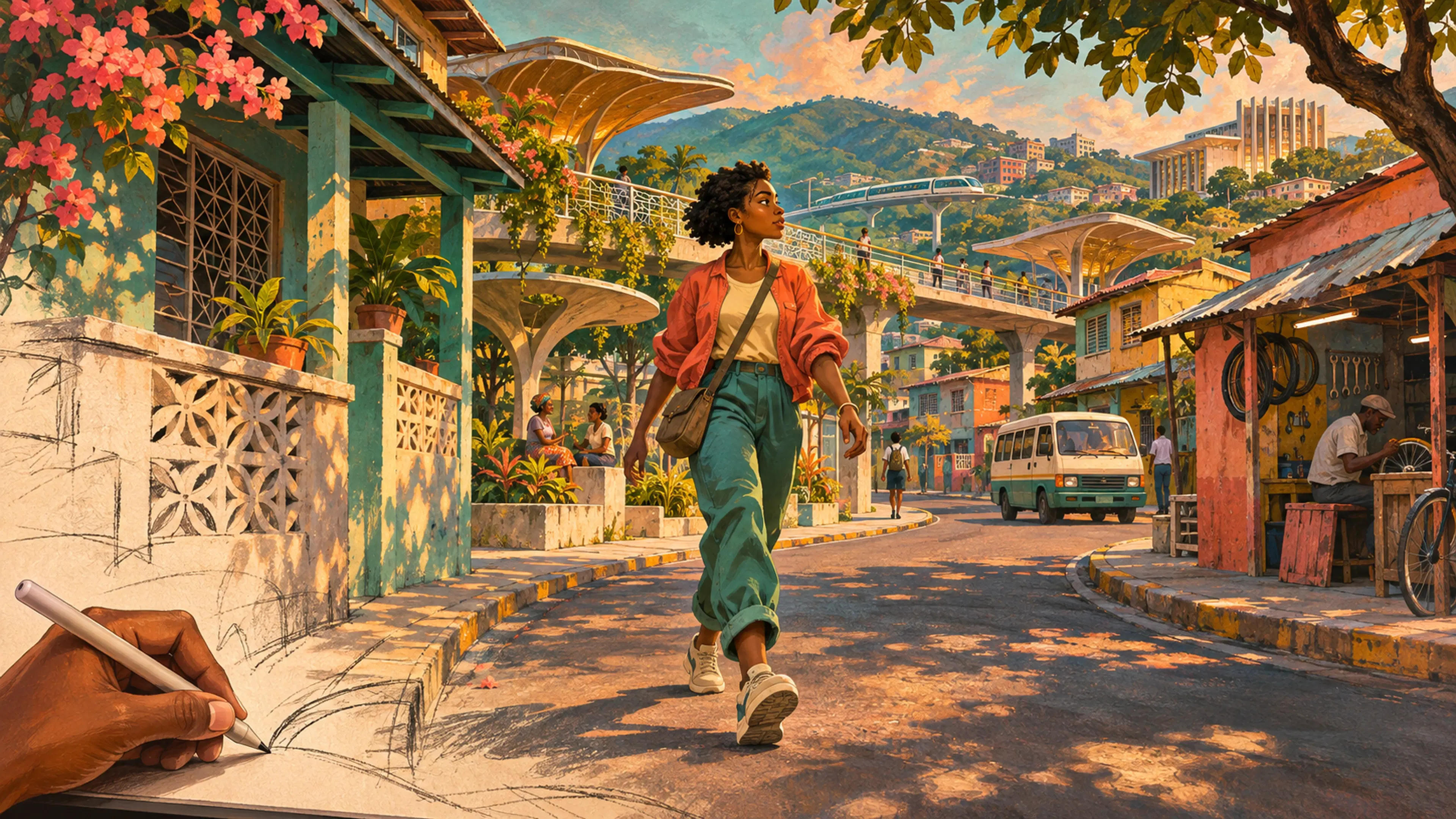
A Caribbean child should be able to recognise home in a cartoon before anybody explains where the story is set.
In the way a grandmother holds a doorway. In the pause before a cousin delivers the punchline. In a street that feels familiar without a palm tree announcing the location.
Imagine what becomes possible when those details belong to the people making the picture.
That is the possibility worth paying attention to in Jamaican animation. A place on screen is part of it. A place behind the drawing tablet, in the production meeting and at the table where a story gets approved matters just as much.
The artist who wanted to help other artists work
In a November 2024 interview with animation software company Toon Boom, Gabrielle Watts described a career decision with considerable weight behind it. She had a scholarship lined up to study medicine in Cuba. She chose animation instead, later studying it at the University of the West Indies.
Her account does not end with the decision to follow a creative path. At Kingston studio ListenMi, she applied with storyboarding as her main interest and project management last on her list. The studio approached her for a production coordinator role. She took it and continued doing storyboard work too.
What she discovered was an appetite for making room for other people to create. Her ambition expanded towards producing: managing the conditions in which the work could happen, as well as helping make the images. Those details come from her published interview, rather than a conversation with Baroow.
There is something powerful in that progression. The person who draws does not have to remain outside the room where budgets and creative priorities are decided.
For a young artist considering a future here, that opens up a larger picture of what the work might become.
Look beyond the finished frame
An animated character may look effortless when it finally moves. Behind it sit separate decisions about design, performance, timing, sound and the world it inhabits.
Imagine Toon, a Kingston studio led by Robert Reid, makes that division of labour visible on its website. Its team profiles identify storyboard, character design, background design, rigging and animation skills. Marlo Scott's profile includes character and background work on Cabbie Chronicles. Leighton Campbell lists storyboarding alongside character design and animation.
These are the studio's own accounts of its people and work. They offer a useful correction to the vague instruction to find a creative career: here are actual disciplines, with names attached.
A background artist can help decide what a neighbourhood feels like. A storyboard artist can shape how a joke lands. A producer can make choices about which ideas receive time and resources. Each role carries a different kind of influence over the finished story.
For anyone who has filled a sketchbook while wondering whether it leads anywhere, that specificity matters. There are skills to study, bodies of work to examine and different ways to contribute. You can begin to see where your own interests might fit.
A culture has more than one story in it
On the Jamaica Animation Nation Network's business directory, Imagine Kulture describes a model that puts original intellectual property first while also offering commercial animation services. Drawtist describes work rooted in Caribbean storytelling, alongside education and mentorship.
These descriptions express the businesses' own positioning. They do not establish commercial success. They also describe an ambition to develop original work with a voice and identity of its own, alongside work commissioned by clients.
That ambition deserves room to be varied. A Caribbean story could be tender, absurd, frightening, futuristic or stubbornly ordinary. It need not explain an entire region to justify one character's existence.
There should be space for a child on an impossible adventure, a family argument that becomes a comedy, or a world that has never existed. Familiarity can give a story texture without becoming its only subject.
ListenMi's portfolio also points to another use for the craft: an animated web series for the Jamaica Accountability Meter Portal. Animation can bring public questions into view as well as entertain. Choosing what deserves to be made visible is itself a creative act.
Possibility needs somewhere to work
A beautiful idea still needs people who can develop it, money to sustain the work and a route to an audience.
Jamaica's Office of the Prime Minister currently presents its National Animation Policy as a Green Paper. Its stated objectives include strengthening collaboration and addressing the gap between training and employment. That is a proposed direction, not evidence that those problems have been solved.
The distinction matters. Young creators deserve encouragement that takes the difficult parts seriously. Enthusiasm cannot substitute for paid opportunities, experienced guidance or time to improve a difficult piece of work.
But the people and studios already doing the work give that encouragement substance. Someone can look at their credits, examine the craft and recognise a path worth investigating. Someone commissioning a project can look beyond a vague request for creativity and understand the people the work actually needs.
The question in the title belongs to both of them.
Who gets to draw the Caribbean? Who gets the experience, responsibility and support to decide what the next picture looks like?
There are Jamaican artists already answering through their work. The invitation is to look closely enough to see them, and to take the next person's ambition seriously before the finished film gives everyone permission to applaud.
Looking for work in Barbados? Explore current listings on Baroow Jobs.